
Quick answer — Common low back pain recurs because the pain fades before its cause: deep muscle chains still tight, an unbalanced pelvis, habits reloading the same tissues. As long as that mechanism persists, each episode sets up the next. Treating the cause, not just the flare-up, breaks the cycle.
A few rough days, then it passes. Until next time — a lifted box, a long drive, nothing at all. If your back works in "episodes", that is not fate: it is mechanics.
Why do flare-ups repeat?
Common low back pain — no identified lesion, the vast majority of cases — is muscular and joint-related. During a flare-up everything contracts in protection. Once calm returns, the pain switches off but the deep tension stays: quadratus lumborum, psoas, gluteal chains. The back then operates permanently near its limit; the smallest unusual effort reignites it.
The scenario is almost always the same. A week of sitting, eight hours a day. A long drive at the weekend. Then a trivial movement — a box, a suitcase, a child lifted from the floor. That movement is not the cause: it is the last drop. A relaxed back would have absorbed it without comment.
The hidden role of pelvis and hips
The lower back often pays for its neighbours. Stiff hips shift every bend onto the lumbar spine; a psoas shortened by sitting pulls the vertebrae forward; sleepy glutes leave the lumbars to stabilise alone. That is why massaging only the sore area buys a week of relief — and why the Thara assessment examines the pelvis–hips–back system before any protocol. Sedentary days make it worse — see Remote work: 7 habits to protect your posture.
Daily life shows it everywhere: tying your shoes by rounding the back instead of hinging at the hips, getting out of the car in one stiff block, sliding forward on the chair as the day wears on. Each of these details reloads the same tissues — hundreds of times a week.
Breaking the cycle: the protocol's logic
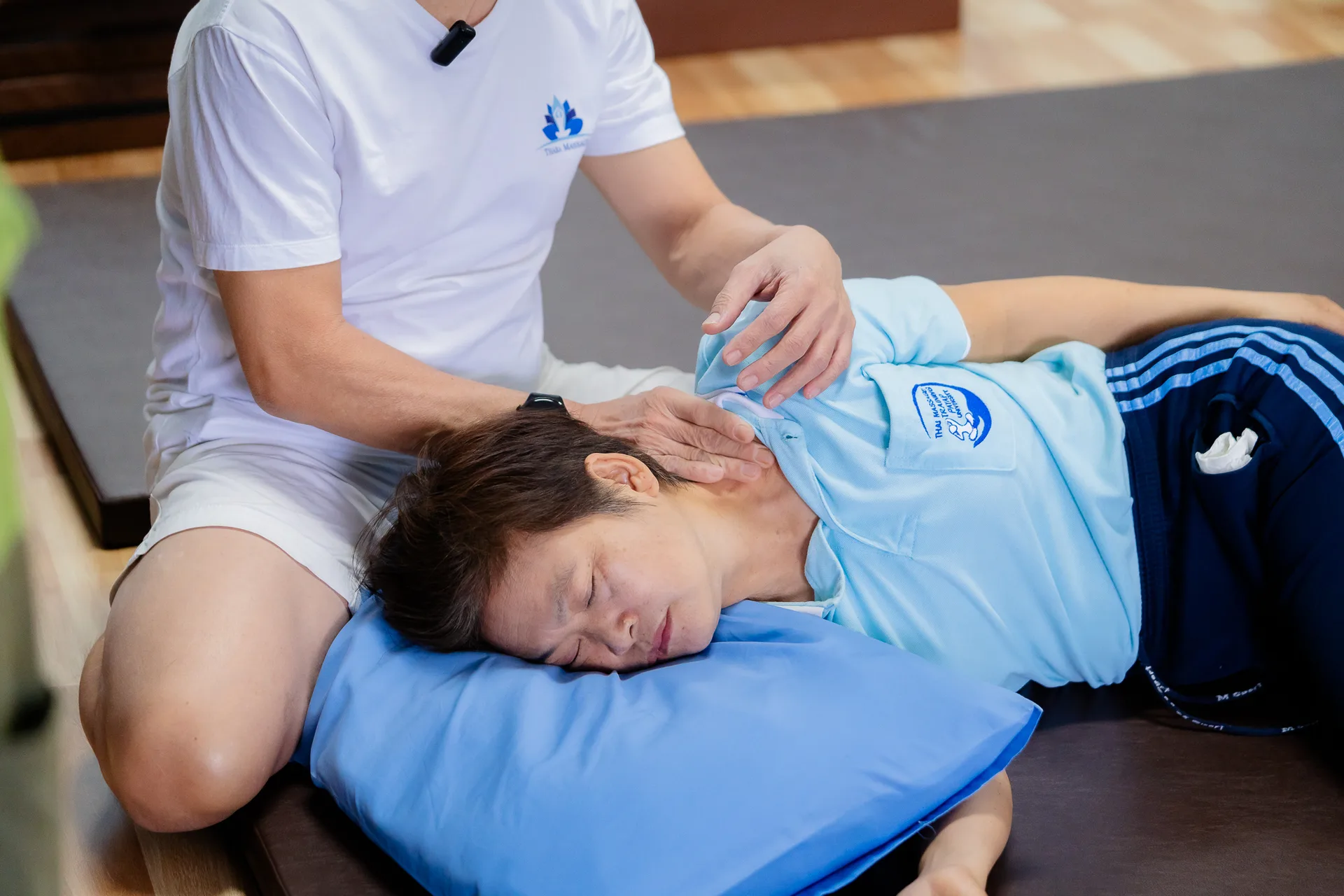
Deep manual work releases the chains that stayed contracted, including outside the painful zone, then rebalances tension around the pelvis. Progress is tracked session to session: range, tension points, daily comfort. Alongside, a few simple habits — standing up regularly, freeing the hips — maintain the result. The goal is not longer gaps between flare-ups: it is no more flare-ups.
The mistakes that keep the pain going
Three understandable reflexes worsen the trajectory. Freezing up, first: beyond two days, strict rest weakens the very muscles meant to protect the spine. Treating only the flare-up, second: painkiller, hot-water bottle, patience — the symptom fades, the cause stays intact. Stop-start sport, third: a sedentary week, then one intense Saturday session. Stiff muscle chains absorb these jolts poorly.
Fear of movement is just as much of a trap. A back you no longer dare to use stiffens further, and the worry grows as mobility shrinks. The right dose exists: regular, progressive activity that does not trigger the pain.
Self-care between sessions
The individualised protocol does the groundwork; a few simple habits protect the result. Stand up every 45 minutes, even for thirty seconds. Free the hips in the evening: a low lunge, held one minute per side, releases the psoas. Walk twenty minutes a day at a brisk pace. If mornings are stiff, sleeping on your side with a cushion between the knees unloads the lumbar spine. Nothing spectacular: consistency is what counts. These habits do not replace deep manual work — they stop it from unravelling.
FAQ
Should I rest during a flare-up? Strict rest usually prolongs the episode. Gentle movement within pain limits helps more.
Do I need imaging? Not for common back pain without red flags. Night pain preventing sleep, fever, neurological signs: prompt medical advice.
How many sessions for a back that has recurred for years? A back that took years to lock up won't release in one session; the assessment sets a realistic course from the first visit.
Can I keep doing sport between sessions? Yes — it is even recommended. Keep the activities that do not wake the pain — walking, cycling, swimming — and temporarily reduce heavy loads. The protocol adjusts to your practice.