
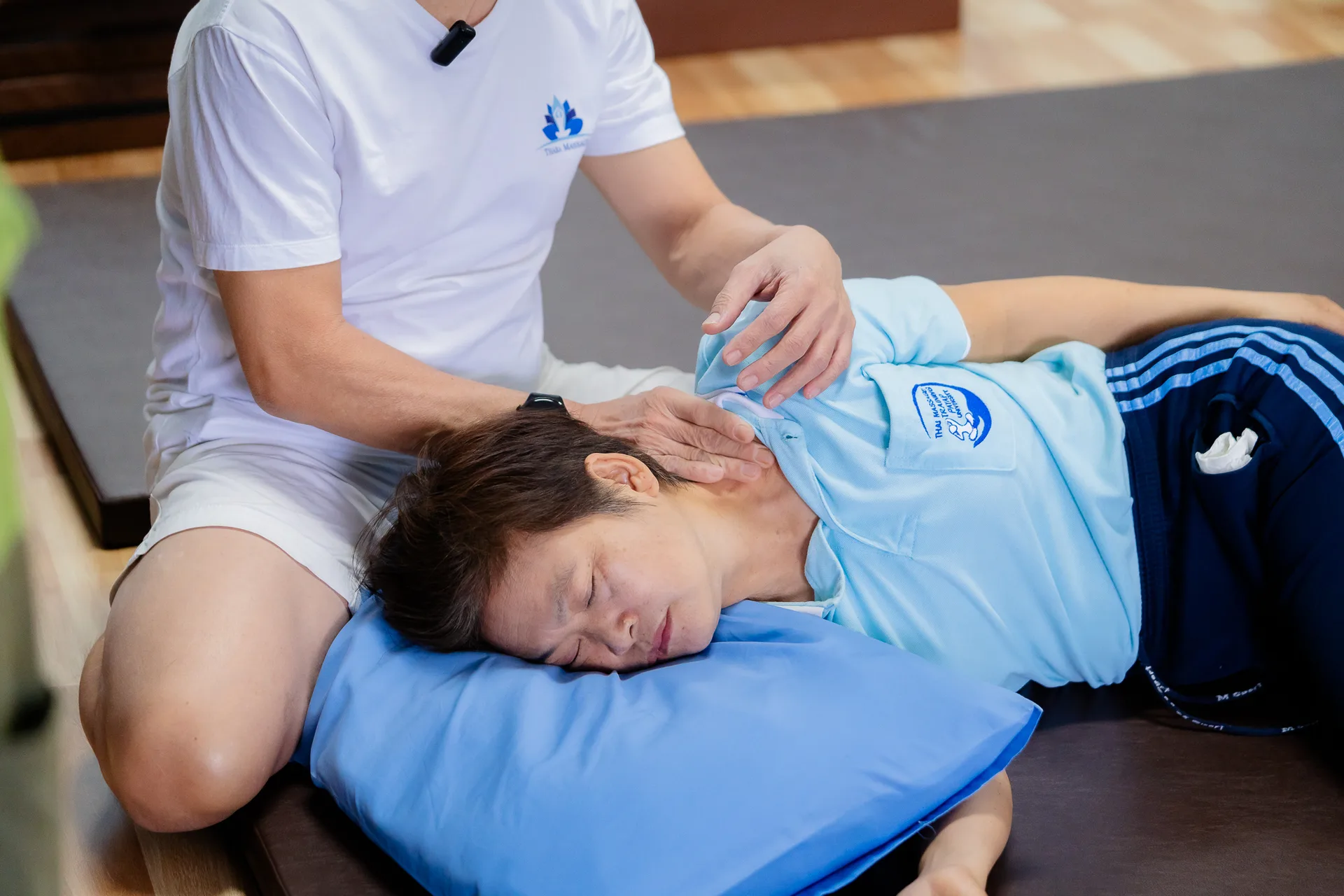
Quick answer — A large share of recurring headaches are tension-type headaches: the pain arises from contracted neck and skull muscles, not from the brain. The suboccipitals, small muscles at the skull base, are the usual suspects. Releasing them in depth often reduces both frequency and intensity of attacks.
A vice around the skull, pressure behind the eyes, pain climbing from the neck: not all headaches are equal — and many take root lower than you would think.
Tension headache or migraine?
True migraine is a neurological event: pulsating, often one-sided pain, nausea, light sensitivity. Tension-type headache squeezes like a headband, on both sides, without marked nausea — and it is far more common. The two can coexist: for many people, neck tension also triggers or worsens their migraines. Telling the patterns apart is part of the assessment.
A useful everyday clue: tension-type headache tends to build through the day and ease with movement or heat, while a migraine usually forces you to stop, in the dark and in silence.
How does a tight neck hurt your head?
At the skull base, the suboccipital muscles constantly fine-tune head position. Overworked by screens, stress or a forward posture — the mechanics described in Neck pain at the screen: understanding cervicalgia —, they develop tension points that refer pain to the forehead, temples or behind the eyes. Jaw clenching, common under stress, adds its own layer.
This "referred pain" phenomenon has an anatomical explanation. Nerves from the upper cervical vertebrae and nerves from the face converge on the same relay in the brainstem. When the signals mix, the brain sometimes locates the pain in the wrong place: the tension is born in the neck, but the forehead does the hurting.
The tissue-based approach
The protocol works the full chain: suboccipitals, upper trapezius, jaw muscles, shoulders. Deep release lowers the pain signalling that sustains attacks; head posture is rebalanced so tension doesn't rebuild. Many clients first notice milder attacks, then fewer — progress is tracked session after session. Each protocol is individualised: someone who clenches at night does not receive the same work as someone whose attacks follow long drives.
When should you see a doctor?
Manual work addresses muscle-based headaches — it never replaces a diagnosis. Some signs call for medical advice before any session: new headaches after 50, a clear change in their usual character, attacks becoming daily, painkillers taken several times a week. These are not necessarily emergencies, but they deserve a proper medical work-up. The Thara assessment actually opens with these questions: if a warning sign appears, medical referral comes before any tissue work.
Self-care between sessions
Between sessions, a few habits support the work. A screen break every 45 minutes, with two or three slow head rotations. Warmth on the skull base in the evening — ten minutes is enough to soften the suboccipitals. Regular jaw checks through the day: teeth apart, tongue at rest. And an attack diary: date, intensity, context. Cross-checked with what each session reveals, this record refines the individualised protocol — and it often exposes unsuspected triggers, such as night driving or overloaded end-of-week days.
FAQ
How do I know my neck is involved? Simple clue: if pressing the skull base reproduces part of your head pain, the muscular lead is serious.
Are repeated painkillers a problem? Taken too often they can sustain "rebound" headaches. Frequent use deserves a review with your doctor.
When is it an emergency? Sudden "thunderclap" headache, fever with stiff neck, vision or speech trouble: emergency care immediately.
Is jaw work part of the protocol? Yes, whenever the assessment reveals clenching. The chewing muscles refer their tension to the temples; releasing them completes the neck work and often strengthens results.