
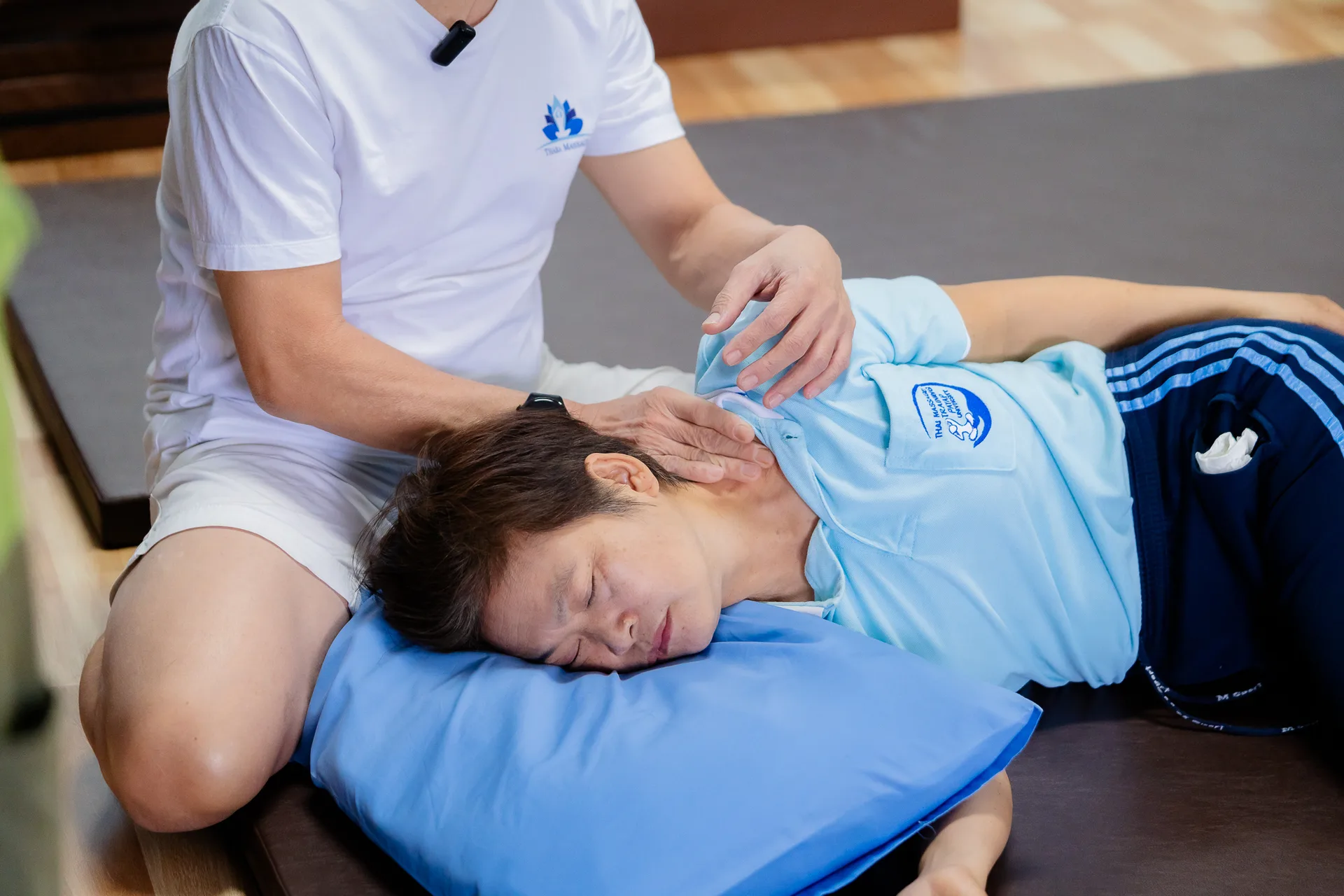
Quick answer — Menstrual cramps are amplified by the state of the tissues around the uterus: a rigid pelvis, tense lumbars and a blocked diaphragm all heighten pain perception. Manual work on the back, pelvis and abdomen, done between periods, helps many women experience markedly more comfortable cycles.
Several days a month on painkillers, hot-water bottle clamped to the belly: period pain is normalised, rarely addressed. Yet the body offers concrete levers.
Why are some periods so painful?
During menstruation the uterus contracts to shed its lining. For some women these contractions become genuine cramps radiating to the back and thighs. Intensity depends on hormonal factors, but also mechanical ones: a pelvis with free tissues tolerates contractions far better than one locked by chronic tension — sitting, stress, a history of low back pain.
Daily life weighs in. A week of sitting eight hours a day stiffens hips and lumbars right before a period. Lack of sleep lowers the pain-tolerance threshold. And anticipating the cramps tightens the belly days in advance — a very real tension, measurable under the fingers during the assessment.
The levers of manual work
Three areas respond particularly well: the lumbars and sacrum, where cramps radiate and postural tension concentrates; the diaphragm and abdomen, often frozen by anticipated pain, whose release restores breathing's natural calming effect; the hips and glutes, whose relaxation gives the pelvis its mobility back. Work happens mainly between cycles, as preparation; stress and sleep play their part too — see Stress and physical pain: breaking the vicious circle. In practice, sessions are scheduled in the quieter half of the cycle, when tissues respond best and deep work stays comfortable.
What to expect — and not expect
The goal is to reduce cramp intensity and painkiller use, not to alter the cycle. Each protocol is individualised: the assessment maps where your pelvis and back hold their tension, and the work follows that map. Very intense pain, worsening over the years or resisting everything, warrants a medical work-up (notably endometriosis): the assessment systematically covers this question, and referral to a physician is part of the approach.
When should you see a doctor?
Therapeutic massage complements medical care; it never replaces it. Some signs call for a gynaecological opinion before any manual work: pain worsening year after year, cramps resisting the usual painkillers, pain outside your period or during intercourse, digestive or urinary trouble that follows the cycle. Very heavy periods also deserve a consultation. Endometriosis in particular still takes years to be diagnosed: the sooner the doubt is cleared, the better. The Thara assessment systematically asks these questions and refers you to a physician whenever a signal requires it.
Self-care between sessions
Between sessions, a few habits extend the work. Heat on the lower belly or sacrum remains a simple, effective ally. Five minutes of full breathing each evening keeps the diaphragm mobile — the muscle that naturally massages the abdomen with every breath. Gentle walking, even during your period, maintains pelvic mobility better than the sofa. And a few hip openers at the end of the day offset the seated hours. It all stays modest; regularity, cycle after cycle, is what makes the difference.
FAQ
When in the cycle should I book? Ideally between periods: tissues respond better, and the effect shows over the next cycle.
Is massage possible during my period? Yes, adapted: gentler work, focused on the back and comfort points.
When should endometriosis be suspected? Disabling pain, worsening over time, pain during intercourse or cyclical digestive issues: discuss it with your gynaecologist.
How many cycles before judging the effect? Allow two to three cycles. The work happens between periods, and the effect is measured over time: cramp intensity, painkiller use, comfort on the hardest days. Session-to-session tracking makes that evolution visible.