
Quick answer — Pain between the shoulder blades most often comes from the rhomboids and mid-trapezius, kept permanently stretched by shoulders rolling forward. These muscles defend themselves by contracting: burning, a precise spot, stiffness. Reopening the front of the body and releasing the area in depth solves both sides of the problem.
It is one precise spot, between spine and shoulder blade, burning by day's end — and no stretch ever seems to reach it. Its origin is rarely where it hurts.
Muscles sounding the alarm
Rhomboids and mid-trapezius tie the spine to the shoulder blades. When shoulders roll forward — screen, steering wheel, phone —, these muscles spend their days stretched under load, holding back the drifting blades. A muscle kept long and loaded eventually contracts: that is the signature burn. The real culprit sits in front: shortened pectorals locking the roll.
Run through a typical day and the maths is quick: a morning commute with arms stretched to the wheel, eight hours of keyboard and mouse, a phone checked head-down, an evening on the sofa. From one end to the other, the shoulder blades never get a minute in neutral. The rhomboids never clock off.
Why stretching isn't enough
Stretching an already overstretched muscle can worsen the discomfort. The effective logic is the reverse: free the front (pectorals, front of shoulders) so the blades can come home, then release the tension points between them, and let posture rebalance — the full approach is described in Rounded back at the desk: correcting postural kyphosis. Breathing matters too: a ribcage frozen by stress keeps the whole area rigid. That is why the relief from rolling your shoulders lasts minutes, not days.
The protocol in practice
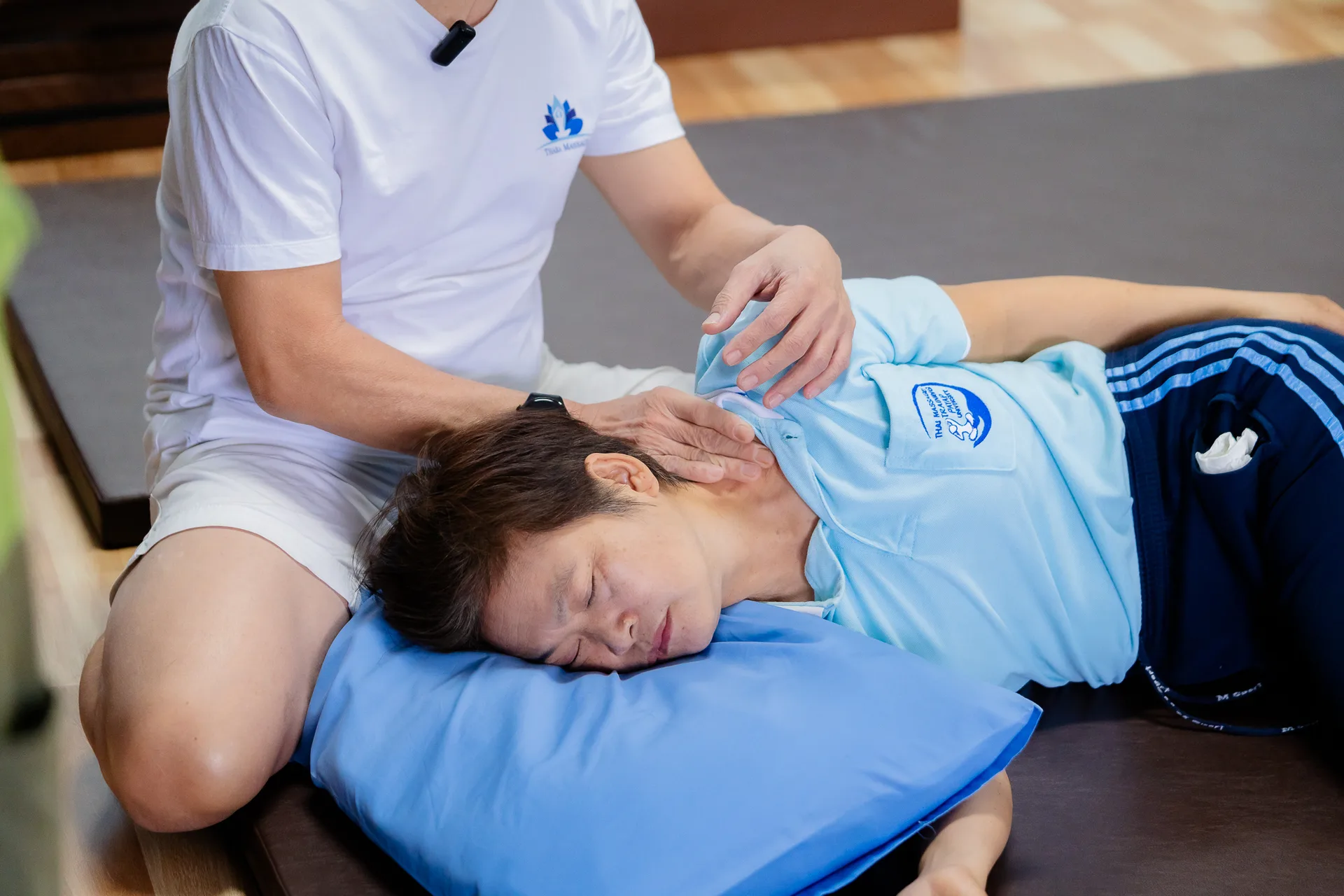
Assessment of shoulders and thorax, deep work on pectorals and the anterior chain, precise release of the inter-scapular points, gentle rib mobilisation to restore breathing amplitude. The protocol is individualised from the assessment: a frozen ribcage is not worked the same way as shortened pectorals. At the end of care: two or three maintenance moves to slot into the office day.
The mistakes that keep the pain going
"Standing up straight" by willpower is the most widespread. Pulling the shoulders back all day demands constant effort — from the same exhausted rhomboids. Posture is not corrected by clenching: it is freed. Second mistake: crushing the sore spot against a ball, hard and long. The immediate relief is real, but without reopening the front of the body the spot returns, sometimes irritated. Third: investing in an ergonomic chair while leaving the screen too low. Equipment helps; it does not replace mechanics. It is the cause that needs treating, not the seat's comfort level.
Self-care between sessions
Between sessions the goal is simple: give the front of the body some air. Thirty seconds of pectoral opening in a door frame, two or three times a day. A movement break every 45 minutes, shoulders loose, eyes on the horizon. Three wide breaths that spread the ribs whenever stress climbs. And in the car, slide the seat back slightly so the arms can bend. These habits look like nothing; they stop the muscle chains from slipping back into old patterns between sessions.
FAQ
Could this pain come from the heart or lungs? Pain on exertion, oppressive or with breathlessness requires immediate medical advice. Muscular pain varies with posture and local pressure.
Why does it worsen with stress? Stress lifts the shoulders and freezes breathing — both load the inter-scapular area directly.
Would a standing desk help? Alternating sitting and standing helps, provided the screen stays at eye level in both positions.
Does sleeping position play a role? Yes. Sleeping curled on your side, shoulders folded in, extends the day's posture. A pillow that fills the gap between head and mattress, and a shoulder that isn't crushed under the body, help the area release overnight.