
Quick answer — Screen-related neck pain comes from a forward-head position: every centimetre forward multiplies the load the neck muscles must hold back. Trapezius and suboccipital muscles seize up from carrying it. Releasing those chains in depth and fixing the workstation treats the problem at both ends.
A head weighs four to five kilos. Tilted 30 degrees toward a screen, it loads the neck muscles with nearly twenty. Eight hours a day.
The mechanics of a pulling neck
Head forward, shoulders rolled in: the posterior neck muscles and upper trapezius work in permanent restraint, like a hand holding a weight at arm's length all day. This static contraction chokes local circulation, fibres tire, tension points settle in. By evening the stiffness climbs; over months, it stops coming down.
The laptop is the worst offender: with screen and keyboard welded together, it forces a choice between your hands and your neck — and the neck always loses. The phone adds its own layer, head bowed on the train, in a queue, on the sofa. Commutes do the rest: driving with arms stretched to the wheel recruits the same muscles before the workday even starts. The cervical spine does not distinguish work from leisure: it counts hours of flexion.
When the neck doesn't stay alone
Established cervicalgia spreads: headaches rising from the skull base — the mechanism is detailed in Migraines and neck tension: the overlooked link —, tension between the shoulder blades, sometimes tingling in the arms when tight tissues compress nerve passages. Sleep degrades, and fatigue makes muscles even less tolerant: the circle closes.
Nights don't help. Sleeping on your stomach forces the neck into extreme rotation for hours; a pillow too thick or too flat extends the working day of the same muscles. Morning stiffness sets the tone — and the screen day restarts on tissues already loaded.
Treat the source, not the symptom
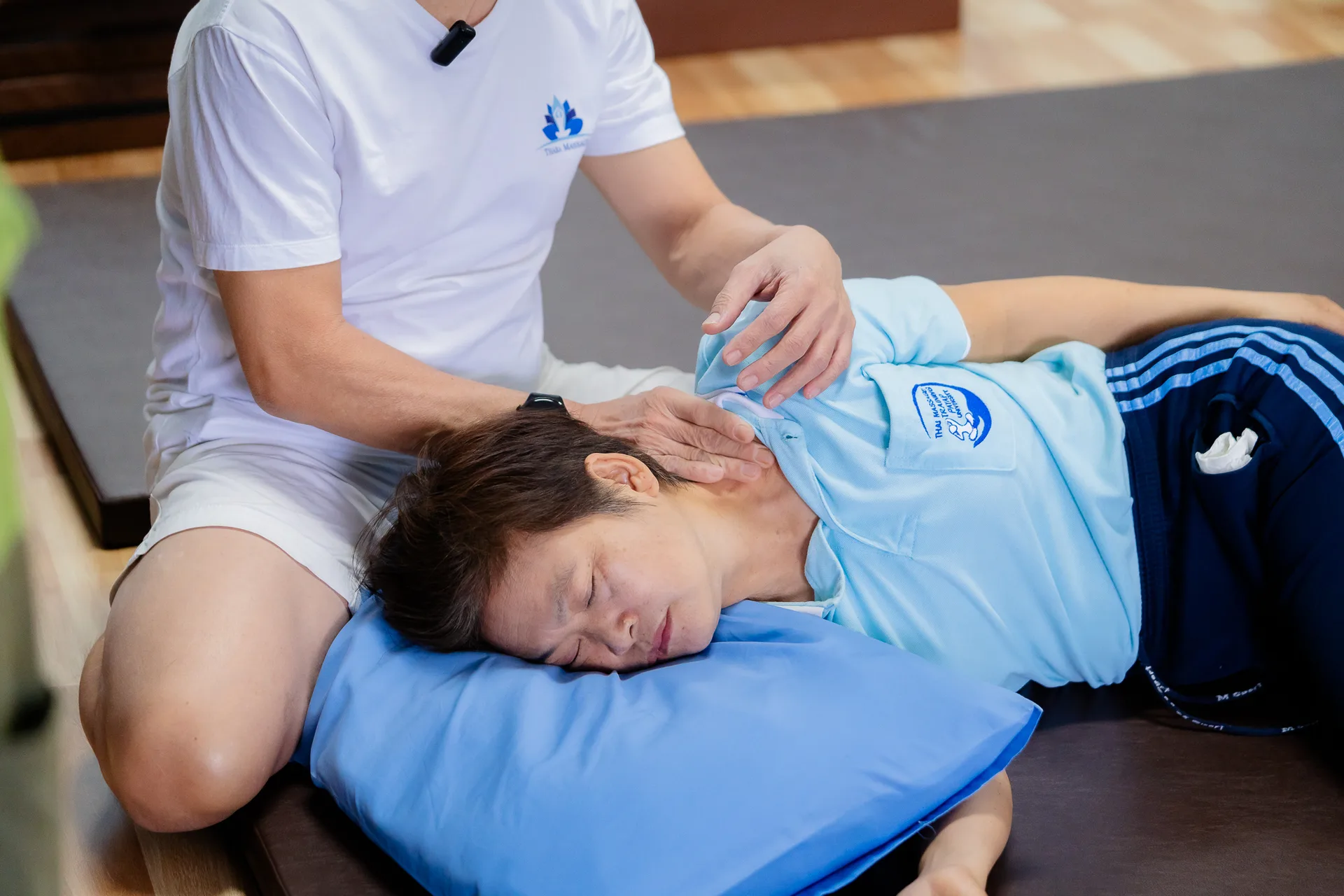
The Thara assessment evaluates head posture, segment-by-segment cervical mobility and compensating chains (shortened pectorals, slumped upper back). The protocol releases suboccipitals, trapezius and levator in depth, then reopens the front of the body so the head can return to its place effortlessly. On the desk side: screen at eye level, forearms supported, movement breaks every 45 minutes — details that change everything.
The mistakes that keep the pain going
The most common: pulling hard on your head to "stretch" a contracted neck. The muscle, under attack, defends itself by tightening further. Another trap: betting everything on equipment. Ergonomic pillow, vertical mouse, high-end chair — useful, but no object compensates for eight hours without a movement break. Finally, carrying your bag always on the same shoulder, or pinning the phone between ear and shoulder, keeps one trapezius permanently loaded. Details? Multiplied by years, they separate a neck that recovers from a neck that settles into pain.
What to expect at the assessment
The first session starts with a full assessment. Observation of head posture, standing then seated. Cervical range testing — rotation, side-bend, flexion — to spot the segments no longer doing their share. Palpation of the muscle chains: suboccipitals, trapezius, levator, and the pectorals, so often involved. Questions about your workstation, commute and sleep. From there comes an individualised protocol: priority areas, depth of work, session rhythm. You leave understanding what is happening in your neck — and what keeps feeding it.
FAQ
Will a special pillow fix it? It can improve nights, but the main cause plays out in daytime working posture.
Cracking my neck brings relief — good sign? Relief is real but brief; repeated, the habit maintains instability without releasing deep muscles.
When should I worry? Pain after an impact, fever, lasting arm numbness: seek medical advice promptly.
How long before I feel a difference? Release is often clear from the first session. For a neck that has been set for years, several sessions are needed for a lasting result; the assessment sets a realistic course from the start.