
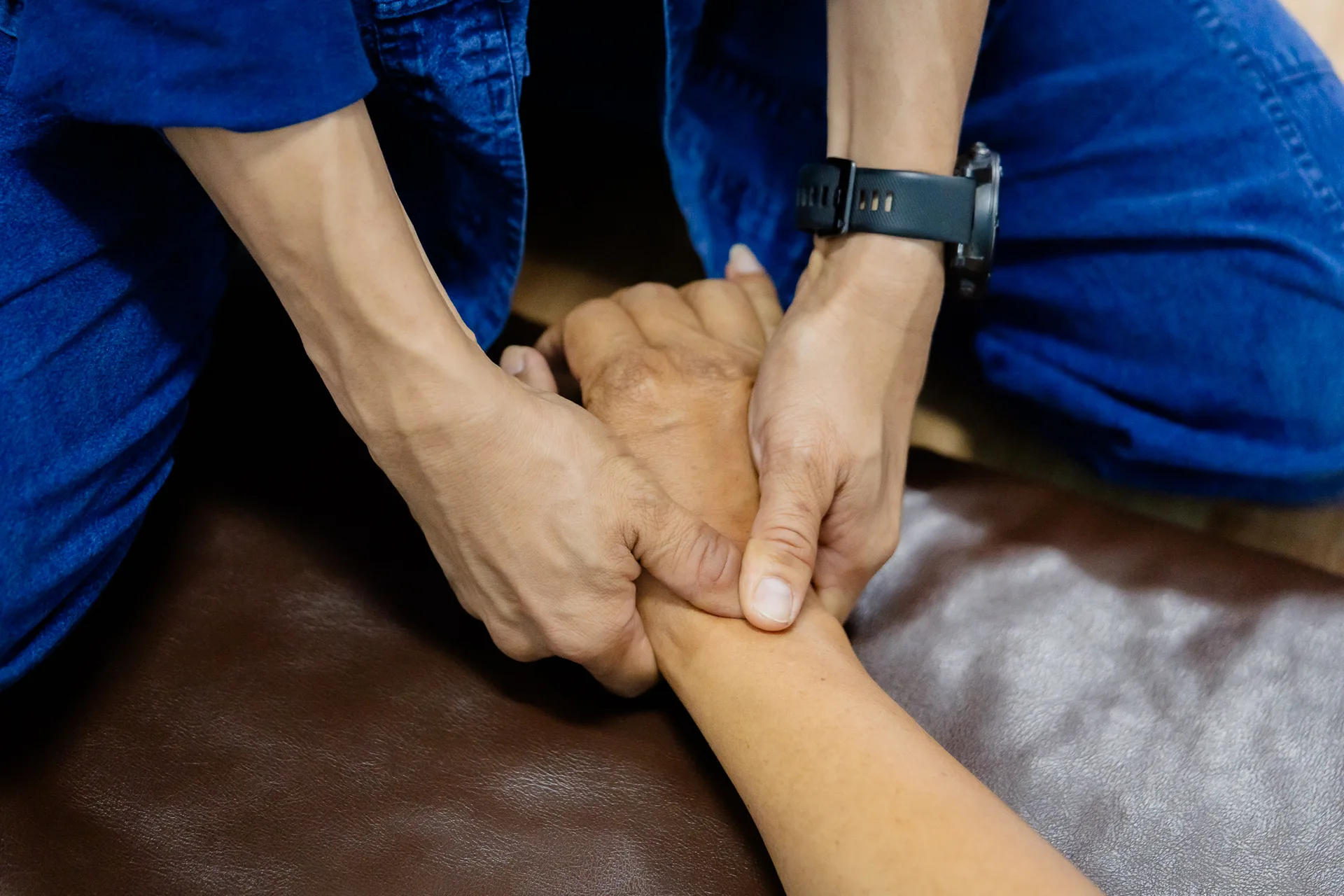
Quick answer — Carpal tunnel syndrome is compression of the median nerve at the wrist, inside a narrow canal shared with nine tendons. Night tingling from thumb to ring finger is the typical sign. When compression stems from tight forearm flexors, manual work along the whole chain can lower pressure in the canal.
Waking at night with a numb hand and shaking it "back to life": that reflex is often the first sign of carpal tunnel syndrome.
Recognising the signs
The median nerve supplies the thumb, index, middle and half of the ring finger — never the little finger, a detail that points the diagnosis. Typical signs: tingling at night or on waking, numbness while holding the wheel or the phone, clumsiness with fine tasks, and at a later stage weakening thumb–index grip. If the little finger is involved, look elsewhere (ulnar nerve).
Context matters as much as symptoms. Long data-entry days, extended smartphone use, vibrating tools, knitting or instrument practice: repeated wrist-flexion gestures almost always appear in the history. Many people also describe the hand going numb on the motorway during the daily commute, forcing them to keep changing grip on the wheel.
Why does the canal tighten?
The carpal tunnel cannot stretch: bone floor, ligament roof. Anything increasing volume inside — tendon sheaths thickened by repetitive use, fluid retention, a wrist bent back over the keyboard — squeezes the nerve. Overtight forearm flexors constantly drag their tendons through the canal: that is the link manual work can genuinely address. Workstation setup matters too — see Remote work: 7 habits to protect your posture.
Hormonal and fluid factors explain why symptoms sometimes surface during pregnancy or around menopause, then fluctuate week to week. Mechanical factors are steadier: a mouse gripped eight hours a day, a keyboard set too high, a wrist bent back on the handlebars during weekend rides. None is dramatic alone; together they keep the canal chronically crowded.
Which mistakes keep the canal under pressure?
Shaking the hand brings momentary relief, but some habits maintain the compression. Wearing a splint day and night without guidance, until the wrist stiffens and its muscles weaken. Propping the wrist bent back on a rest that sits too thick. Skipping breaks because "it fades once I move". Above all, letting daily tingling drag on for months: the longer the compression lasts, the longer the nerve takes to recover.
What happens during the assessment?
The assessment first maps the exact territory of the symptoms — finger by finger — to confirm the median-nerve pattern. It then evaluates flexor tightness, mobility of the wrist, elbow and shoulder, and work habits: keyboard, mouse, tools, phone. This full reading of the muscle chains leads to an individualised protocol — and to immediate medical referral if the picture looks severe.
What the protocol can change
After assessment (affected territory, triggering movements, duration), work targets the flexor chain from fingertips to elbow, wrist mobility, and the shoulder and neck compensations that often come with it. The work is progressive: releasing the flexors lowers the drag on the tendons, which reduces friction inside the canal over the following weeks. Night tingling often eases first, then the daytime episodes space out. Severe or deficit forms belong with a physician — referral is then immediate.
FAQ
Why mostly at night? The wrist naturally curls during sleep, raising pressure inside the canal.
Is it only a screen-work problem? No: repetitive manual tasks, vibration, pregnancy and individual factors also favour compression.
Is a night splint useful? Often yes: it keeps the wrist neutral and lowers night-time pressure. It eases the symptom; working the muscle chains addresses the cause.
When should I see a doctor quickly? Loss of strength, constant numbness or muscle wasting at the thumb base: seek medical advice without delay.