
Quick answer — Plantar fasciitis is irritation of the fascia supporting the arch of the foot, typically felt in the heel with the first steps of the morning. It is almost always linked to an overtight posterior chain — calf, Achilles tendon, sole. Releasing that whole chain, not just the foot, brings lasting relief.
The first steps out of bed are the worst: a sharp point under the heel, easing as you walk, returning after every rest. The classic signature of plantar fasciitis.
Where does the heel pain come from?
The plantar fascia is a fibrous band running from heel to toes, supporting the arch at every step. When the load exceeds what it can absorb — temporary weight gain, return to running, flat shoes, long hours standing — its heel insertion becomes irritated. Morning pain has a simple explanation: the fascia shortens overnight, and the first steps snap it back under tension.
The risk scenarios are familiar. A hiking season restarted too eagerly in spring, full days standing behind a counter or on a ward, a new running plan on tarmac. Even walking downhill — routine in this region — loads the posterior chain heavily. Like many musculo-tendinous syndromes, plantar fasciitis builds by accumulation: the fascia tolerates a lot, until the total exceeds what it can adapt to.
Why isn't the foot the only culprit?
The plantar fascia functionally extends the posterior chain: calves and Achilles pull on the heel from behind. Shortened calves — heels, sedentary habits, sport without stretching — mechanically increase traction on the fascia. Treating the sole alone is like tensioning an elastic band from one end while ignoring the other.
Reading the problem as a chain changes the strategy. A stiff ankle forces the fascia to compensate at every step. An unbalanced pelvis shifts how weight lands on each foot. That is why the assessment always looks above the foot: treating the cause means understanding where tension really accumulates.
Which mistakes keep the heel painful?
Walking on the outer edge of the foot to dodge the pain: that compensation breeds new tension in the knee and hip. Stacking anti-inflammatories to keep running: the signal fades, the overload continues. Spending home-office days in flat slippers: the fascia works without support. Above all, waiting for it to pass on its own: the older the irritation, the stiffer the posterior chain becomes, and the longer recovery takes.
The Thara protocol for plantar fasciitis
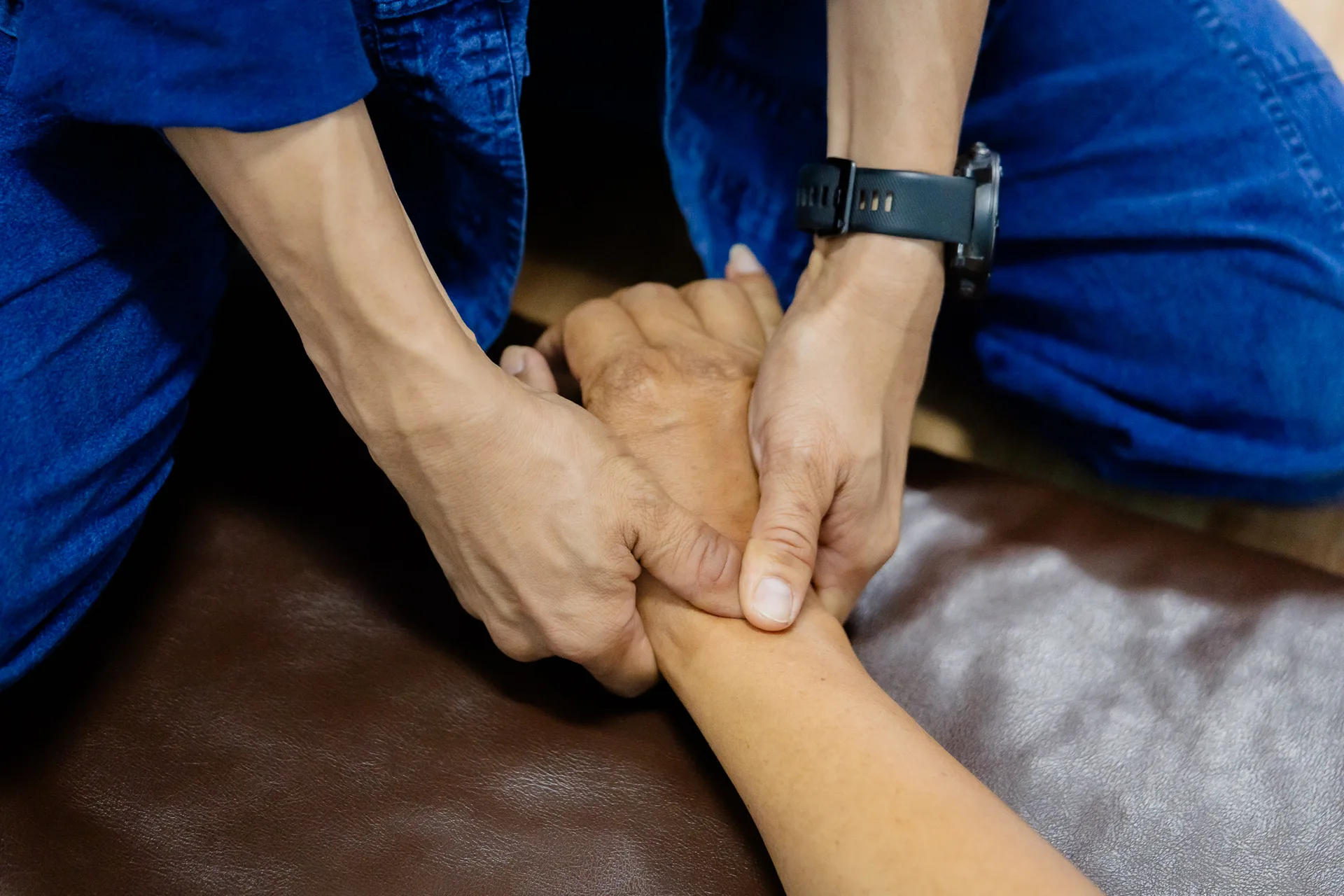
Assessment first: foot strike, ankle mobility, calf tension, overall posture. Deep manual work then releases the calf–Achilles–sole complex, frees fixation points and restores elasticity to the chain. Each session ends with a quick recheck — ankle range, calf tension — so the protocol adjusts to how your chain actually responds. Simple self-care (sole rolling, targeted stretches) maintains gains between sessions — autonomy is part of the method.
Self-care between sessions
Three simple habits extend what the individualised protocol achieves. In the morning, before your feet touch the floor, gently mobilise the ankle and stretch the calf, leg straight against the wall. During the day, roll a soft ball under the arch, one to two minutes per foot, without hunting for pain. In the evening, stretch the full posterior chain — calf, back of thigh — breathing calmly. Consistency beats intensity.
FAQ
Is this a "heel spur"? A spur is an X-ray finding sometimes associated with it, but the fascia irritation causes the pain, not the bone.
Do I have to stop running? Reduce temporarily, rarely stop. Return is progressive, guided by how things evolve.
Can the pain come back after improving? Yes, if the posterior chain tightens again — an abrupt sports comeback, long standing spells. Regular self-care sharply reduces that risk.
Are insoles enough? They ease the load but don't release the posterior chain. The two approaches complement each other.