
Quick answer — Sciatica usually stems from the lumbar spine (disc, nerve root). Piriformis syndrome comes from a deep buttock muscle compressing the sciatic nerve along its path. Symptoms look alike, but the origin — and therefore the approach — differ completely.
Pain in the buttock radiating down the back of the thigh: the reflex is to think "sciatica". Yet a small deep muscle is sometimes the real culprit. The distinction is not academic: it decides where — and how — to act to treat the cause.
Two conditions that mimic each other
| Piriformis syndrome | Lumbar sciatica | |
|---|---|---|
| Origin | tight piriformis muscle | lumbar disc / nerve root |
| Peak pain | deep in the buttock | lower back + leg path |
| Worsened by | prolonged sitting, crossing legs | bending, coughing, lifting |
| Radiation | rarely below the knee | often down to the foot |
Everyday clues sharpen the picture. Piriformis pain typically flares after an hour behind the wheel — the daily commute to Geneva or Lausanne —, on a hard chair, or with a wallet in the back pocket. Lumbar sciatica wakes up instead when lifting a crate, coughing or bending forward. No single clue is enough on its own, but the combination points clearly.
Why does the piriformis tighten?
This small deep hip rotator works constantly: pelvis stabilisation, walking, running, sitting. Long sedentary stretches, abrupt return to sport or postural imbalance shorten it. Once tight, it irritates the sciatic nerve running just beneath — sometimes through it. An unbalanced pelvis keeps the problem going; posture matters, as in Rounded back at the desk: correcting postural kyphosis.
Athletes are anything but spared. Running on uneven ground, trail sessions in the Jura hills, resuming jogging after winter, poorly dosed glute strengthening: the overworked muscle defends itself by seizing up. At the other extreme, long seated days compress it and starve it of oxygen. Two opposite lifestyles, one outcome: a deep muscle that no longer lets go.
How does manual work help?
The assessment first separates the two conditions: mobility tests, triggering positions, history. If the piriformis is at fault, the protocol works the muscle in depth along with the glute–hamstring–lumbar chain, then rebalances the pelvis. If signs point to a true lumbar issue, medical referral is systematic — results are our only judge.
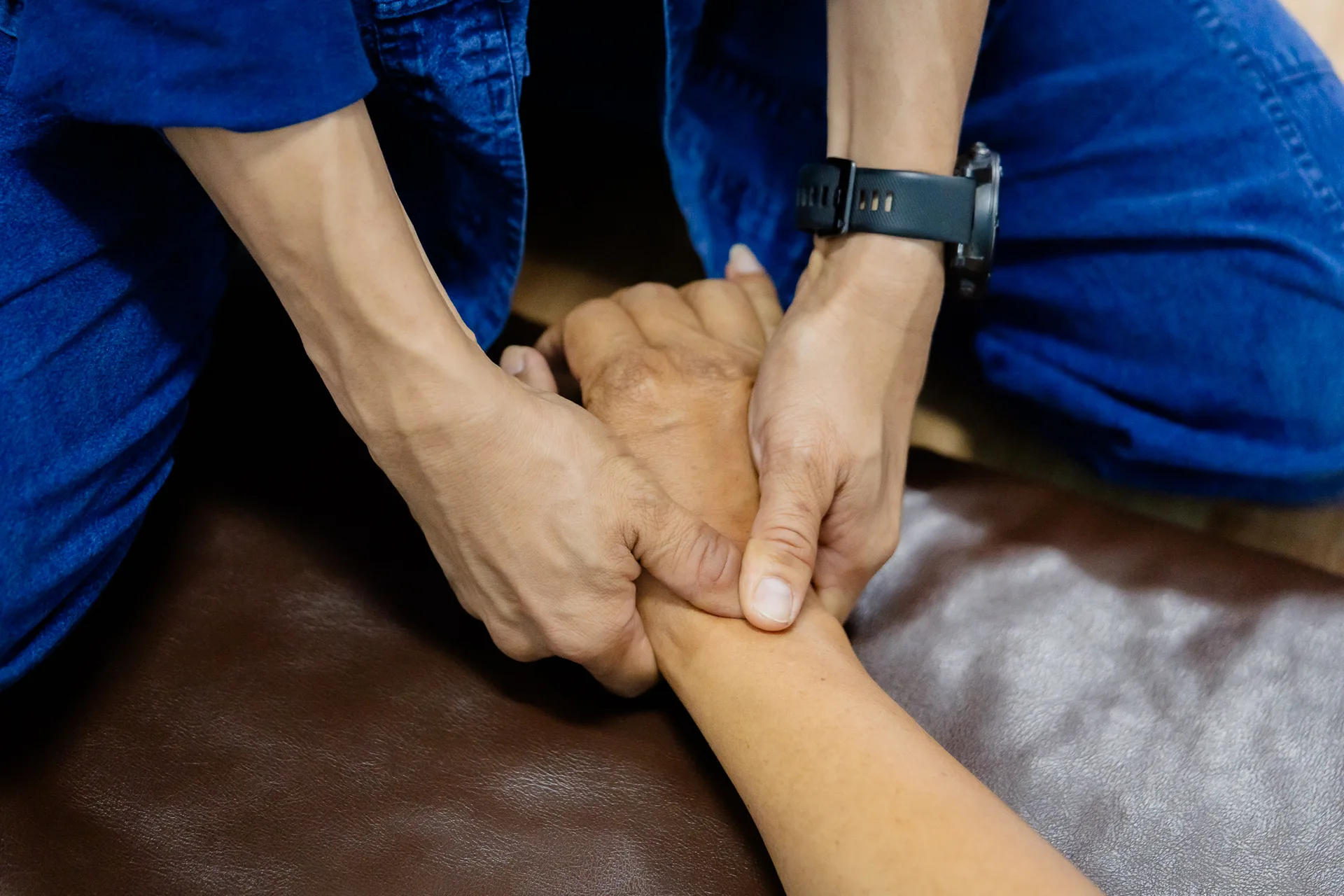
Releasing the piriformis takes precision: the muscle lies deep beneath the gluteus maximus and only yields gradually. Sessions alternate deep work with range-of-motion checks, so the individualised protocol's progress is measured objectively.
What happens during the assessment?
The Thara assessment follows an investigative logic. First the history: when did the pain start, in which positions, radiating where? Then functional tests: hip rotation, prolonged sitting positions, palpation of the glute–hamstring–lumbar muscle chains. Finally a global postural reading: pelvis, foot strike, work habits. This mapping shapes the protocol — and triggers medical referral whenever needed.
When should you see a doctor?
Some signals demand prompt medical advice, because they suggest serious nerve involvement: loss of strength in the leg or foot, numbness around the saddle area, urinary changes, or pain that no position relieves at night. Sciatica with fever, or following a fall, deserves the same caution. Outside those situations, symptoms dragging on for weeks still warrant a proper diagnosis.
FAQ
Sitting makes it worse — is that typical? Yes, it suggests the piriformis: the muscle is compressed between seat and nerve.
Does piriformis syndrome show on imaging? Rarely. Diagnosis is mainly clinical, through functional tests and elimination.
Are piriformis stretches enough? They help, but a muscle that has been tight for months rarely lets go through stretching alone. Deep work unlocks; stretching maintains.
Can I keep running? Often yes, with adjusted volume and frequency during care.