
Quick answer — Tension and poor sleep feed each other: a contracted body keeps the nervous system on alert and blocks deep sleep; shortened sleep lowers the pain threshold and re-tightens muscles. Releasing the body in depth acts on both sides at once — often the most effective way in.
Falling asleep with concrete shoulders, waking at 3 a.m. with a clenched jaw, emerging more tired than the night before: when the body won't disengage, the night doesn't repair.
How tension sabotages the night
Deep sleep requires a nervous system in recovery mode. Chronically contracted muscles — neck, jaw, diaphragm — send the brain a continuous vigilance signal: something is "holding", so something threatens. The result: laborious sleep onset, light sleep, night wakings. Position alone doesn't explain painful mornings either: a tense body clenches even on the best mattress. Many discover this after upgrading their bedding: the investment helps, the wakings continue — the cause was not in the bed.
The vicious circle of short nights
Lack of deep sleep has two measurable effects on the body: the pain perception threshold drops — everything hurts more at equal load — and muscle recovery degrades, yesterday's tension no longer being erased. Each bad night thus makes the body tenser, and each tense day makes the night worse. The mechanism mirrors chronic stress, described in Stress and physical pain: breaking the vicious circle. One good night is not enough to reverse it — which is why the way out is built over weeks, not days.
Where to start
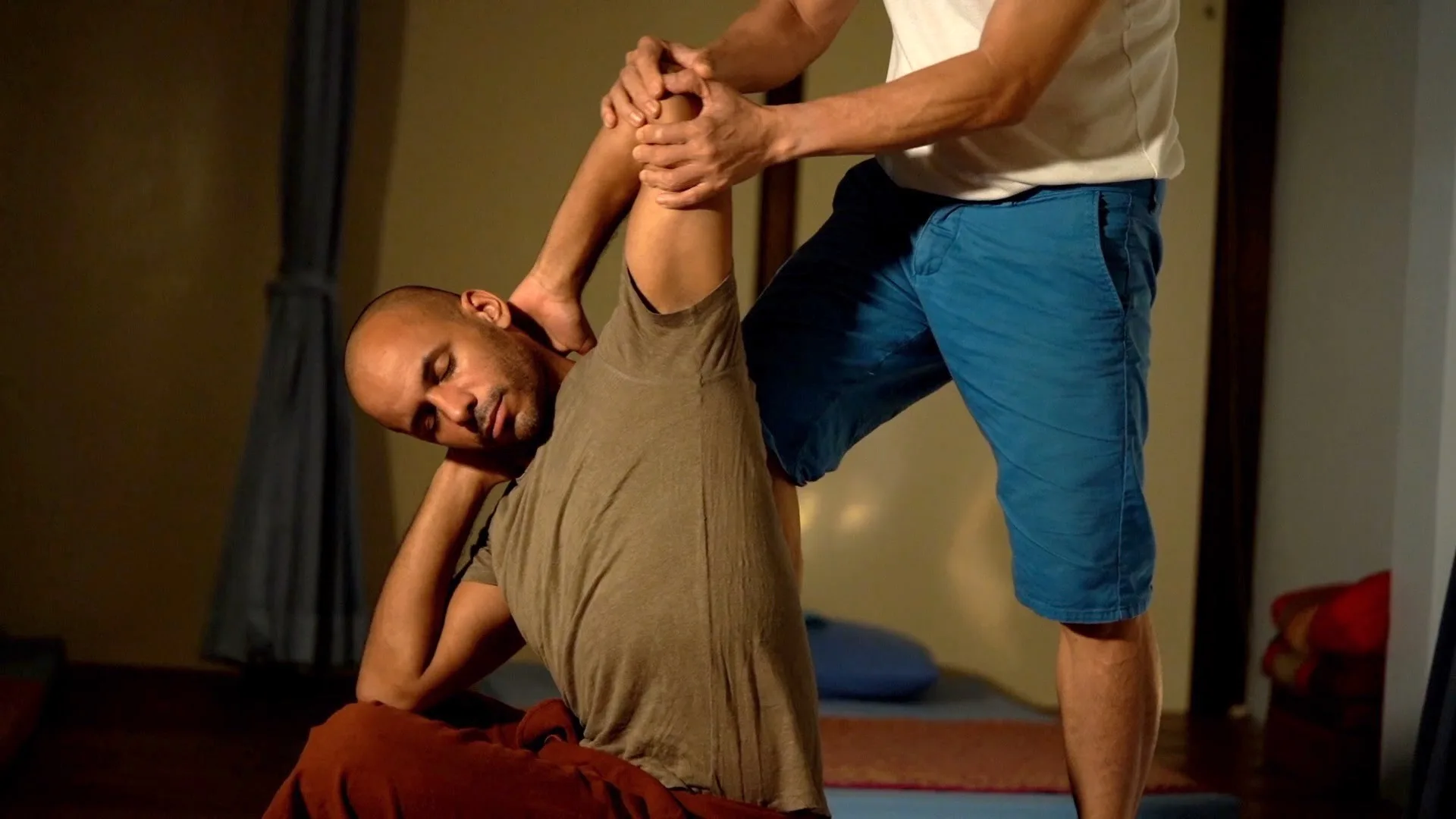
With the body, often: it is the most direct lever. Deep manual work releases the zones that maintain the alert — neck, shoulders, diaphragm, jaw — and many clients report heavier nights and less stiff mornings from the first sessions. Alongside, three simple habits: regular hours, screens off 45 minutes before bed, slow breathing in bed (four seconds in, six seconds out, five minutes).
The mistakes that keep it going
Some evening reflexes make the mechanics worse. Intense sport after 9 p.m. leaves the nervous system revving at bedtime — activity helps sleep, but earlier in the day. The glass of wine "to unwind" eases sleep onset and fragments the second half of the night. Working from the sofa until late, neck flexed over the laptop, prepares stiff mornings. Bedding counts too: a pillow unsuited to your sleeping position imposes eight hours of strain on a neck already under tension. Conversely, changing your mattress will not resolve tension that is manufactured during the day.
Self-care between sessions
Between sessions, a short routine protects the gains. In the evening: warmth on the neck and shoulders — a hot shower, a hot-water bottle, precious through Swiss winters —, five minutes of slow breathing, jaw deliberately unclenched. During the day: breaks that lower vigilance, rather than screen breaks that maintain it. The bedroom, finally: cool (17 to 19 °C), dark, reserved for sleep. None of these habits replaces the deeper work on tension — they simply stop it from unravelling from one week to the next.
FAQ
Why do I clench my teeth at night? Bruxism is often the nocturnal discharge of accumulated daytime tension; releasing jaw and neck during the day frequently reduces it. Mention it to your dentist too.
Can magnesium help? It supports muscle relaxation in some people, without treating established tension. Consider it a supplement, not a solution.
When should I see a doctor about sleep? Snoring with breathing pauses, marked daytime sleepiness, insomnia lasting over three months: medical advice is warranted.
Which sleeping position with a tense neck? On your back or side, with a pillow that fills the space between head and mattress without bending the neck. On your stomach, the forced rotation maintains tension all night long.