
Quick answer — Frozen shoulder (adhesive capsulitis) is a progressive stiffening of the capsule surrounding the shoulder joint. It typically evolves through three stages over several months. Deep manual work on the shoulder's muscle chains, paced to the current stage, helps reduce pain and restore range of motion.
Reaching for a cup becomes a challenge and sleeping on your side impossible: frozen shoulder settles in slowly, then takes over everyday movement. It mostly affects people aged 40 to 60, slightly more often women, and sometimes visits the other shoulder a few years later.
How do you recognise a frozen shoulder?
Three signs are almost always present: diffuse pain that worsens at night, stiffness limiting movement in every direction — even when someone else moves your arm — and a staged course: painful first, then stiff, then recovering. Left alone, the full cycle can stretch over twelve to twenty-four months.
Daily life makes the signs concrete. Grabbing the seatbelt, reversing the car or scraping ice off the windscreen becomes a struggle. At the office, reaching for a folder on a high shelf triggers a sharp jolt. At night, rolling onto the affected side wakes you with a start. That night pain is often what finally prompts a consultation.
Why does the shoulder lock up?
The joint capsule thickens and contracts, often after immobilisation, a minor injury, or with no clear cause. Around the joint, the deltoid, pectoral, trapezius and rotator cuff tighten protectively. That muscular lock adds stiffness on top of stiffness — and it is the reversible part that manual work addresses most directly.
Some profiles are more exposed: diabetes, thyroid conditions, recent surgery, or an arm immobilised after a skiing fracture. Often, though, nothing explains the onset. One thing never changes: the less the shoulder moves, the more the muscle chains set. The cycle feeds itself, and compensations spread to the neck and back. Like many musculo-tendinous syndromes, frozen shoulder thrives on time left to pass.
Which mistakes keep the shoulder frozen?
Three understandable reflexes tend to make things worse. First, immobilising the arm completely: the capsule contracts even faster in inactivity. Second, forcing the stretch: in the painful stage, aggression rekindles the irritation and hardens the muscular guard. Third, compensating without noticing: hitching the shoulder, twisting the trunk, overloading the healthy arm.
Those compensations create new tensions, sometimes more stubborn than the capsulitis itself. The right strategy fits in one line: move often, within pain-free range, and never force.
What can therapeutic massage bring?
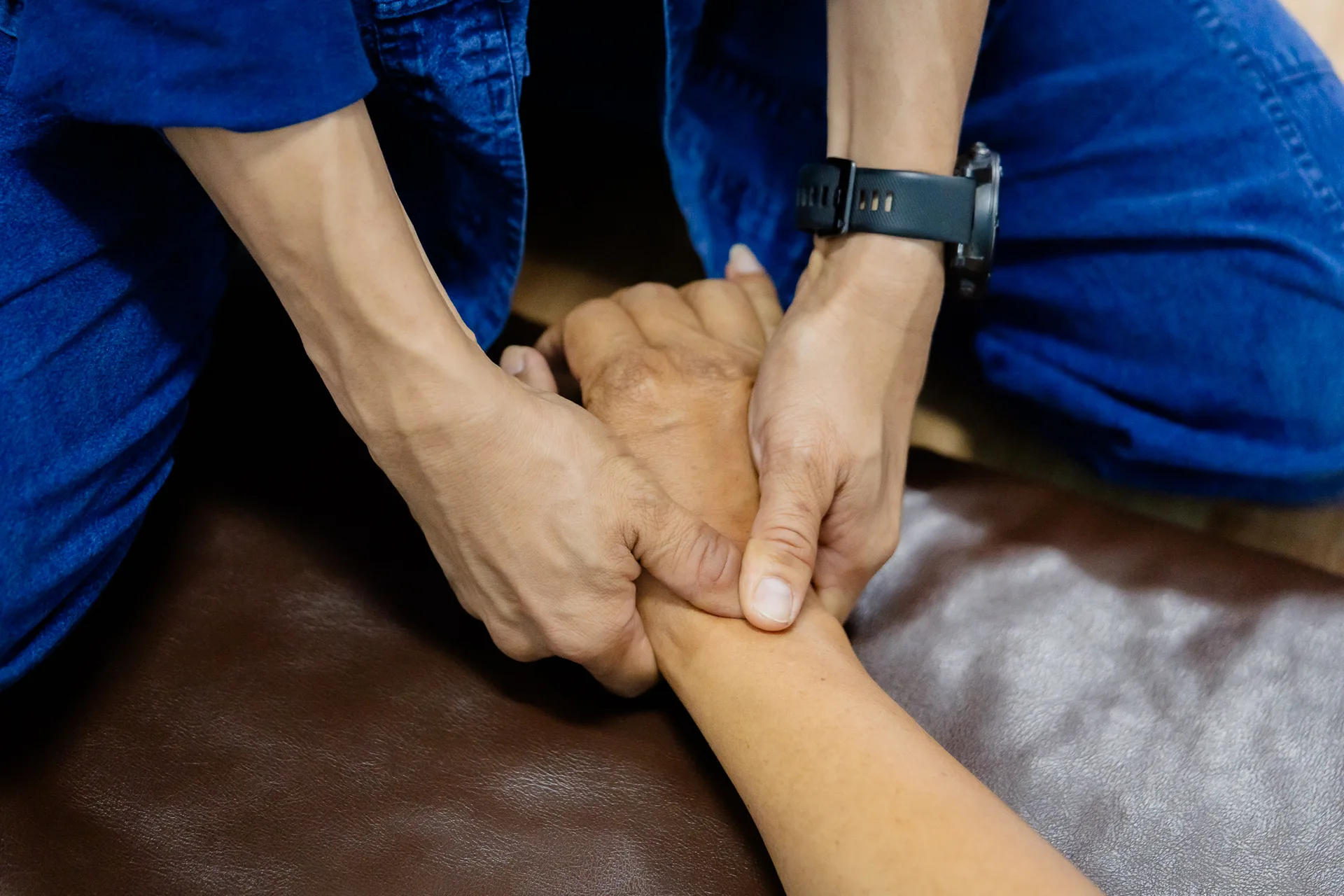
The Thara approach starts with an assessment: stage, true range of motion, compensations (neck, back). The protocol then releases the muscular and tendinous chains in depth, without forcing the joint, progressing session by session. The goal: give the tissues room, calm the pain, and support recovery rather than endure it. Every shoulder moves at its own pace, so the individualised protocol follows the current stage — never the other way round. A stiff neck often comes with it — see Neck pain at the screen: understanding cervicalgia.
When should you see a doctor?
A frozen shoulder needs a medical diagnosis, because other conditions mimic it: rotator cuff tendinopathy, osteoarthritis, a cervical issue. Seek advice promptly if the shoulder is hot, red or swollen, if the pain follows a violent injury, or if fever comes with it. Those red flags belong with a physician. Once the diagnosis is set, manual work and medical follow-up complement each other naturally.
FAQ
How long does a frozen shoulder last? Often 12–24 months untreated. Proper care aims to shorten each stage and limit compensations.
Should I push through the stiffness? No. Forcing feeds the irritation. Work stays within available range, which expands gradually.
Can I keep working? Usually yes, avoiding heavy loads and overhead movements. Gentle daily motion is part of the recovery.
Does massage replace medical advice? No. Medical diagnosis remains essential; manual work is complementary.